
You can feel it in Tamarindo when the forecast turns on. People start talking at breakfast, boards get waxed a little more carefully, and the big question pops up fast: are we going north to Witch’s Rock, or pushing farther to Ollie’s Point?
If you’re researching witch’s rock vs ollies poin’t surf, you’re already thinking like a traveler who wants to maximize water time, not just collect a photo. Both waves are legendary for a reason. They’re also very different experiences, and the “better” choice depends on your level, what the tide is doing, what the wind is doing, and how much adventure you want baked into your session.
Witch’s Rock vs Ollie’s Point surf – the quick feel
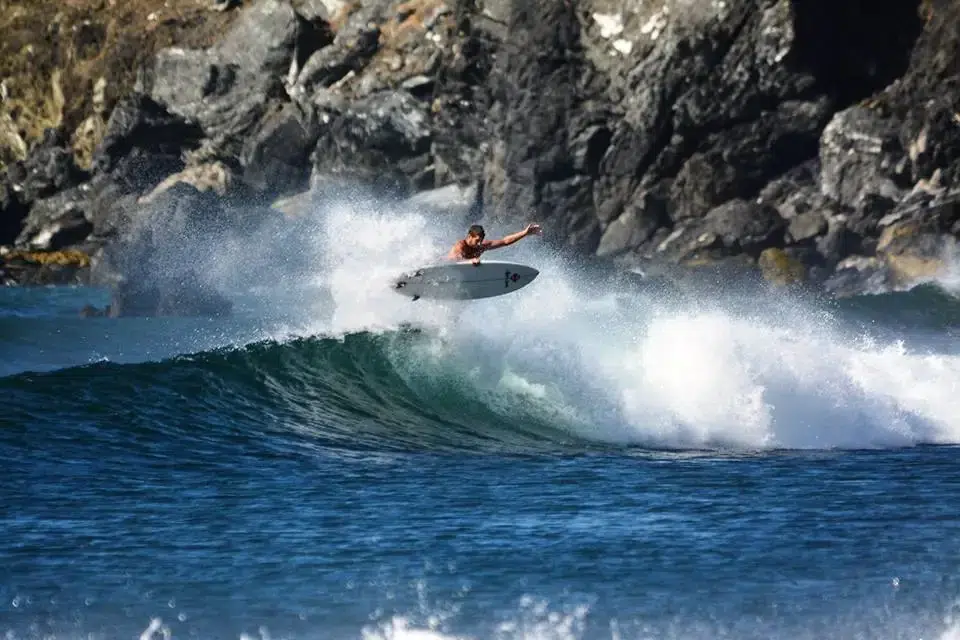
Witch’s Rock (Roca Bruja) is the headline act: an exposed beach break that can shift from playful to powerful in a heartbeat. It’s open to swell, typically offers multiple peaks, and can deliver everything from forgiving walls to fast, hollow runners when the sand lines up.
Ollie’s Point is the opposite vibe. It’s more tucked in, more directional, and when it’s on, it can feel like the wave is doing the work for you – long, clean right-hand walls that invite you to open up your turns and keep linking sections.
That’s the high-level difference. The real decision gets clearer when you look at what each wave asks of you.
The wave itself: what you’ll surf at each spot
Witch’s Rock: shifting peaks, punchy power
Witch’s Rock is a beach break near the Santa Rosa area, which means the sand is always rearranging the menu. One day you’ll have a clean A-frame with workable shoulders. Another day the peak might be more wedgy, faster, and more hollow. That variability is part of the magic – and part of the challenge.
Because it’s exposed, Witch’s Rock usually has more size available than more protected zones. When swell shows up, it shows up there first. For intermediates and advanced surfers, that can mean legitimate push and some of the most memorable waves of your trip. For newer surfers, it means you’ll want a very honest look at conditions before paddling out.
Ollie’s Point: a right-hand point with a rhythm
Ollie’s Point is a right-hand point setup that can produce long rides with a repeatable line. When it’s clean, it’s the kind of wave where you can settle into a stance, look down the line, and actually think about what you want to do next.
That consistency is gold for progression. If you’re working on trimming, generating speed, and linking turns, a point wave can give you more time per wave to practice. The trade-off is that point waves tend to be more sensitive to tide and swell direction, and when they’re good, they attract attention.
Skill level: who should choose which?
This is where most trip plans go sideways. People don’t get held back by courage – they get held back by choosing a wave that doesn’t match their current toolkit.
If you’re a beginner
Most true beginners should not build their trip around either of these as a first objective. Not because they’re “too scary” in a dramatic way, but because both spots are inconsistent fits for learning fundamentals. When you’re focused on popping up, controlling direction, and learning lineup awareness, you want a wave that stays friendly and predictable.
If you’re a beginner who’s already catching green waves consistently and you have coaching support, Witch’s Rock can sometimes be a fun step-up on a smaller, mellow day. Ollie’s Point is usually less forgiving for early-stage surfers because the lineup dynamics and the need to hold a line down the point reward stronger board control.
If you’re an intermediate
Intermediates often have the best “decision leverage” here.
Choose Witch’s Rock if you want to level up your confidence in more open-ocean conditions: handling faster takeoffs, reading shifting peaks, and dealing with more power when the swell has some size.
Choose Ollie’s Point if you want longer rides that let you practice repeatable mechanics: bottom turns with space, cleaner cutbacks, and better flow. If your goal is to surf more waves and build rhythm, a point can deliver that – when it’s working.
If you’re advanced
Advanced surfers can have a lifetime day at either spot.
Witch’s Rock becomes a high-performance canvas when it’s lined up – punchy sections, steep faces, and the potential for tubes. You’re also dealing with the reality of an exposed break: more water moving around, more variability, more consequence.
Ollie’s Point, when it’s really on, can feel like a right-hand playground. The length of the wave invites you to push harder and get creative, and the structure of a point wave makes it easier to commit to bigger turns because the face stays organized.
Swell, wind, and tide: the conditions that make the call
People love to argue “which wave is better,” but locals usually ask a different question: “Which one is better today?”
Swell direction and size
Witch’s Rock is exposed and tends to pick up more swell energy. That’s great when you want size or when other breaks feel sleepy. It can also mean it jumps from fun to heavy quickly.
Ollie’s Point is more particular. It can be incredible on the right swell direction and size, but it doesn’t always light up just because the forecast looks big. When it does turn on, it often rewards you with cleaner, longer walls.
Wind
In Costa Rica, wind can be the quiet dealbreaker. An exposed beach break will show wind texture sooner than a more protected point. If it’s windy, Witch’s Rock can get bumpy, while Ollie’s Point can stay more groomed depending on the day.
Tide
Tide matters at both spots, but in different ways. Beach breaks can change personality dramatically as water depth changes – a wave that’s mellow at one tide can get faster and hollower at another.
Point waves often have a “sweet spot” tide where the wave stands up and connects sections best. If you hit it right, it feels like you timed the universe. If you miss it, it can feel like you drove a long way for an average session.
The experience: logistics, comfort, and how your day feels
Surf travel isn’t just about the wave. It’s also about what it takes to get there, how long you can stay, and how much energy you have left at the end.
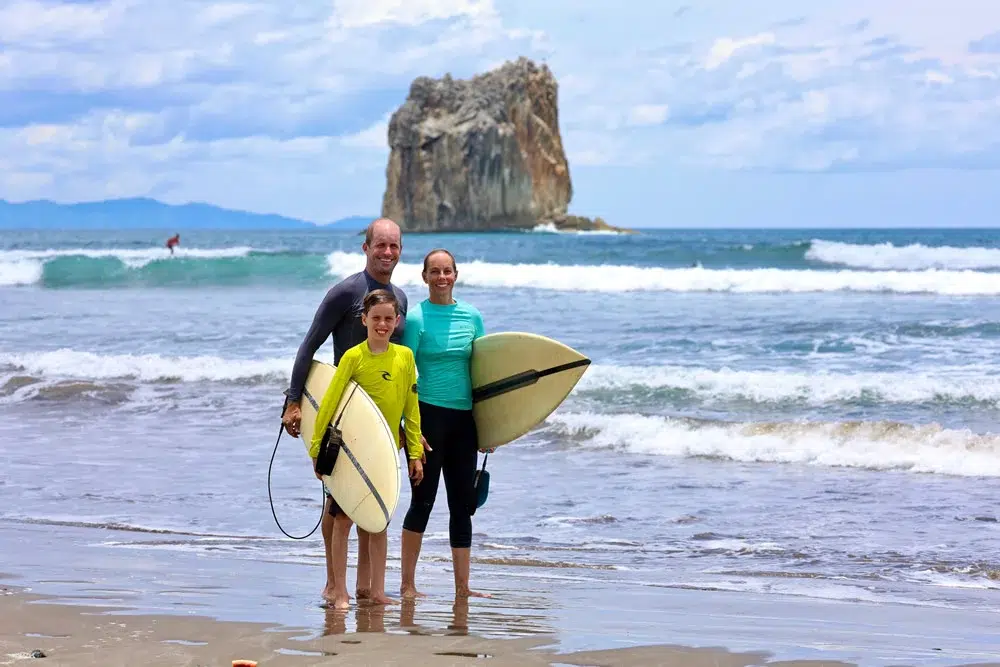
Witch’s Rock and Ollie’s Point are not “walk out from your hotel” surf spots for most travelers. They’re typically reached by boat, and that’s part of the adventure – dolphins, sea cliffs, and that feeling that you’re going somewhere special.
The practical difference is that Witch’s Rock often offers more room to spread out because it’s a beach break with multiple peaks. Ollie’s Point is more of a defined takeoff zone. On a good day, that can mean more waiting your turn and more emphasis on lineup etiquette. If you love order and rhythm, you’ll enjoy it. If you’re hoping to quietly hunt peaks on your own, Witch’s Rock can feel less constrained.
Progression: what you’ll actually get better at
If your goal is to come home surfing better – not just “surfing harder” – pick the wave that matches the skill you want to sharpen.
At Witch’s Rock, you’re training adaptability. You learn to read the ocean faster, reposition confidently, and commit to quicker decisions. That translates to better surfing everywhere, because most of the world’s surf isn’t a perfectly shaped point wave.
At Ollie’s Point, you’re training continuity. Longer walls give you more reps per ride: more time to set a line, adjust speed, and link turns without the wave shutting down immediately. If you’re trying to turn your surfing from reactive to intentional, those extra seconds matter.
Choosing your day: a simple decision filter
If you’re torn, start with two questions. First, what does the wind look like during the hours you’ll be on it? Second, what’s the most honest description of your current comfort zone – can you handle fast takeoffs and moving peaks, or do you surf best when the wave offers a clear path?
If you want the higher-variance day with the potential for a standout session, Witch’s Rock is usually the pick. If you want the cleaner, more structured wall that can make your surfing feel smoother, Ollie’s Point is hard to beat when it’s on.
And if you’re traveling with a mixed-level crew, that “it depends” becomes real. The best day is often the one where everyone gets waves that build confidence, not the one that looks the most impressive in a photo.
If you want help making those calls without burning time on guesswork, that’s exactly what we do at Witch’s Rock Surf Camp in Tamarindo – daily spot selection based on swell, tide, and wind, plus coaching that matches the wave to your level so your trip stays fun and productive.
A helpful way to think about it: don’t chase a name, chase the conditions that let you surf your best – because the wave you’ll remember most is the one where everything clicks.