
You wake up, check the wind for about five seconds, and you are already close enough to hear the sets hitting the sand. That is the real promise of a beachfront surf camp in Tamarindo – not just a pretty view, but fewer decisions between you and the water.
Tamarindo is one of Costa Rica’s most consistent, user-friendly surf towns, and it is also busy, social, and full of options. That combination is exactly why “beachfront” can either be the best decision you make or an expensive detail that does not change your surf progression at all. The difference comes down to how the camp runs your week: coaching, timing, equipment, and whether the operation actually uses the location to get you more and better waves.
What “beachfront” actually changes in Tamarindo
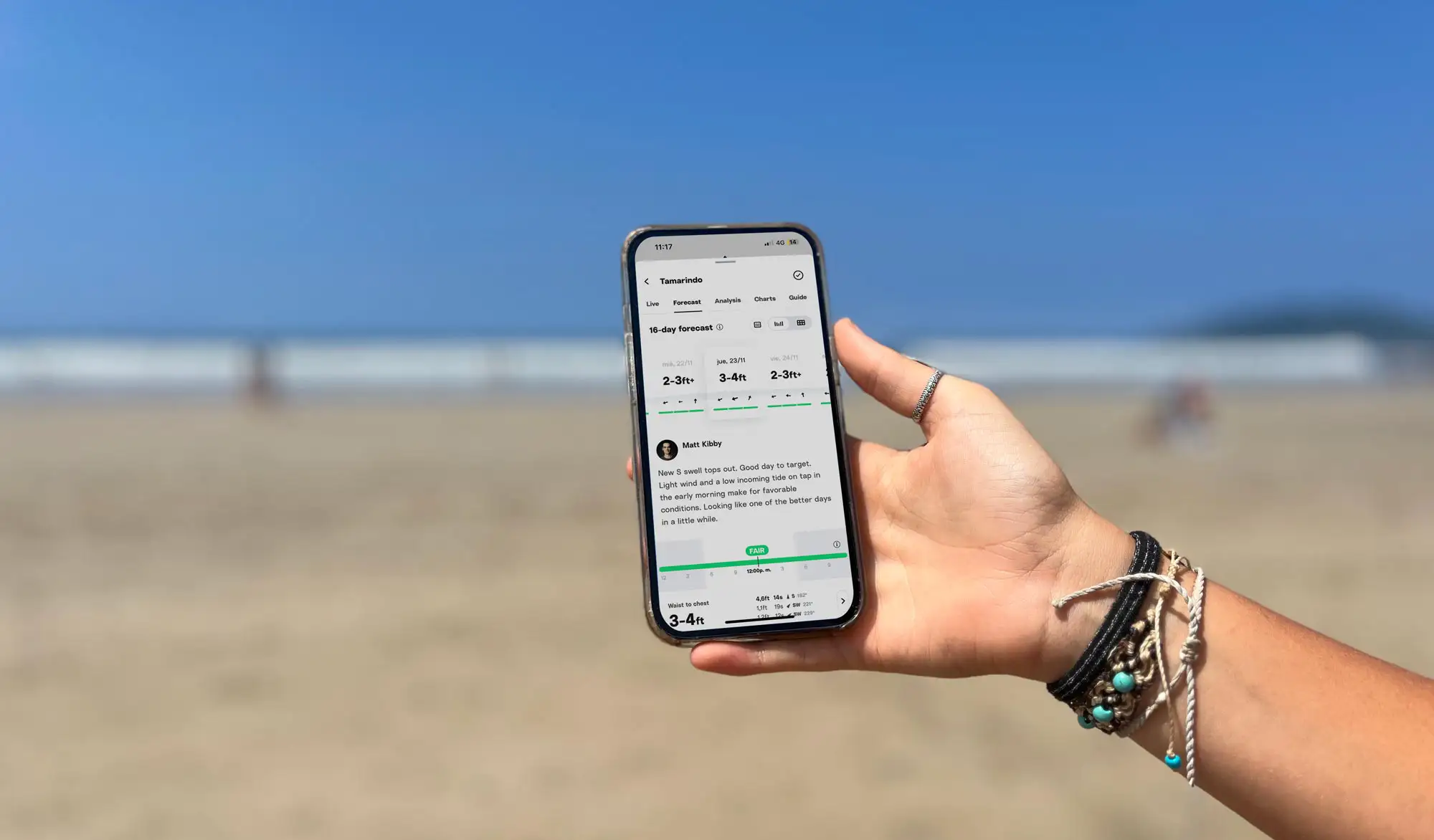
In a place like Tamarindo, surf is not hard to find. What is hard to find is a week where you surf the right tide, at the right spot, with the right board, with someone watching your technique – and you do it day after day without burning half your energy on logistics.
A beachfront base changes three things immediately. First, you can surf more often because you are not coordinating rides, parking, or board transport every session. Second, you can be flexible. If the wind goes sideshore at mid-morning, you can pivot earlier or later without losing the whole day. Third, you get repetition. Progress comes from stacking quality reps, and the simplest way to get more reps is to remove friction.
The trade-off is that beachfront in Tamarindo puts you in the center of town. That means you will hear nightlife in peak season, you will see more foot traffic, and you may share the water with other travelers. If you want silent, secluded jungle vibes, beachfront is not the vibe. If you want easy, social, surf-first days, it is.
Tamarindo’s wave mix: why it’s a perfect camp hub
Tamarindo’s main beach break is a key reason camps can run structured programs here. It offers dependable surf with multiple peaks, sandy bottom, and a forgiving learning curve. For true beginners, that means you can focus on the fundamentals – paddle position, pop-up mechanics, stance, and basic wave-reading – without adding unnecessary risk.
For intermediates, Tamarindo is still valuable because it provides a consistent place to refine takeoff timing, speed generation, and better turns. The key is not just surfing the same wave every day. It is learning how to adjust to tide and swell, and how to choose the right peak for your level.
For advanced surfers, Tamarindo itself might not be the “dream wave” every session, depending on swell direction and crowd levels. But as a base, it is excellent. You can score Tamarindo when it is good and use it as your launch point to hunt quality waves nearby when conditions call for it.
The coaching question: surf vacation or surf progression?
A beachfront surf camp Tamarindo can be anything from “we’ll rent you a board and point at the ocean” to a tightly organized progression system. If your goal is a real jump in skill, you want structure.
Beginners should look for coaching that includes ocean awareness, lineup etiquette, and safety – not as a lecture, but as a daily habit. You want instructors who teach you how to read incoming sets, identify rip currents, and choose a takeoff zone that matches your ability. That is how you go from occasional whitewater wins to consistent green waves.
Intermediates should look for feedback that is specific, not generic. “Bend your knees” is fine once. After that, you need coaching that connects technique to outcome: why you are missing waves (late paddle, drifting inside, wrong angle), why you are losing speed (flat stance, poor rail engagement), and what to change on the next wave.
Advanced surfers need a different kind of value: local decision-making. Tide windows, wind shifts, and choosing between boat and van missions can be the difference between a “fun trip” and a trip where you score.
Why video analysis matters more than people think
Most travelers assume video is a nice add-on. It is actually one of the fastest ways to improve because it removes the guessing game.
In the moment, surfing feels fast and chaotic. On video, the truth is obvious: your feet placement, whether your shoulders are leading the turn, if you are standing too tall, or if you are looking down the line early enough. A good camp uses video to create one or two clear focus points per session. Not ten. Not a laundry list. Just the changes that will move the needle this week.
The nuance: video is only helpful if the coach can translate it into a simple plan in the water. Otherwise, it becomes entertainment.
The underrated advantage: an on-site board quiver
Board choice is one of the biggest silent factors in surf progression. Many visitors show up with one board and try to force it to work in every condition. A camp with a large, on-site quiver can match the board to your level and the day’s surf, which saves time and builds confidence.
For beginners, that usually means stable, high-volume boards that help you catch more waves and practice technique without constant wipeouts. For intermediates, it might mean transitioning to a more responsive shape when your takeoffs and trim are consistent. For advanced surfers, it means having options when the swell jumps, the tide shifts, or you want a different feel.
The trade-off is simple: having unlimited access is only valuable if someone is helping you choose correctly. More boards do not automatically equal better surfing. The right board does.
What a well-run beachfront camp day feels like
A good day at a beachfront surf camp in Tamarindo has a rhythm that keeps you surfing without feeling rushed.
You start with an early read on conditions. If you are a beginner, that might mean heading out when the tide and crowd are more forgiving. If you are intermediate or advanced, it might mean timing the session for a better window or planning a guided trip.
After your surf, you are not scrambling to return boards or find transportation. You can rinse off, grab breakfast, and actually recover. That recovery matters more than people realize. Surf trips are physical. If you want to surf multiple days in a row and improve, you need sleep, hydration, and a pace you can sustain.
Later, you might do a second session, a clinic, or video review. The point is that the day is built around surfing, not around getting to surfing.
Guided wave-hunting: when Tamarindo is the backup plan
The best camps treat Tamarindo as both the classroom and the home base. When conditions are right, staying on the main beach is the move. When a swell or wind pattern favors other breaks, guided trips are where the value spikes.
Northern Guanacaste has world-class options, and the famous names are famous for a reason. But those waves come with variables: access, timing, safety considerations, and a learning curve. A guided program helps you show up at the right time, with the right board, and a plan for the lineup.
This is where “all-inclusive” should mean more than meals. It should mean you are not piecing together shuttles, boat rides, and rental boards while trying to decipher a forecast you do not fully understand.
The logistics bundle: what you’re really paying for
People often compare a camp package to booking everything separately, and on paper, DIY can look cheaper. The question is whether you are buying a cheaper trip or a better surf week.
When a package includes beachfront lodging, daily coaching or guided sessions, video feedback, breakfast, boards, and airport transfers, you are paying for fewer failure points. You are also paying for time. Not “vacation time” in the abstract – actual hours in the water that would have been lost coordinating rides, searching for boards, or arriving at the wrong spot at the wrong tide.
If you are a confident, experienced traveler who loves planning, DIY can be fun. If you are flying in from the US and you want a stress-free surf-first trip, the bundle is often worth it.
Who a beachfront surf camp Tamarindo is best for
If you are a beginner who wants to stand up consistently and start riding green waves, beachfront plus structured lessons is a strong setup because it gives you repetition, safety, and confidence.
If you are an intermediate who can pop up but feels stuck, you want a program that mixes coaching, video analysis, and smart spot selection. That combination is what turns “I got lucky on a few waves” into “I can do this on purpose.”
If you are advanced, you are looking for efficiency: early calls, local knowledge, and quick missions when the swell turns on. Beachfront keeps you ready, and good guides keep you in the right place.
Families and mixed-level groups do well in Tamarindo because the town is easy, the beach is accessible, and different levels can surf at the same time with different coaching tracks.
A proven option in town
If you want the full beachfront, all-inclusive model with structured coaching tracks for different levels, Witch’s Rock Surf Camp has been running surf vacations in Tamarindo since 2001 and has hosted 50,000+ guests. The program is built around daily instruction or guided travel, video coaching and seminars, unlimited board access from an in-house quiver, daily breakfast, and private airport transfers from Liberia (LIR) – designed to keep you surfing more and planning less.
The decision that makes the trip
When you choose a beachfront surf camp in Tamarindo, you are not just choosing where you sleep. You are choosing how many good decisions are made for you each day – the tide call, the board choice, the coaching cue that fixes a bad habit, the nudge to surf one more session because the wind just backed off.
Pick the setup that gives you the most time in the water and the clearest path to progress, then let the rest of Tamarindo – sunset walks, post-surf tacos, and that laid-back pura vida energy – fall into place on its own.