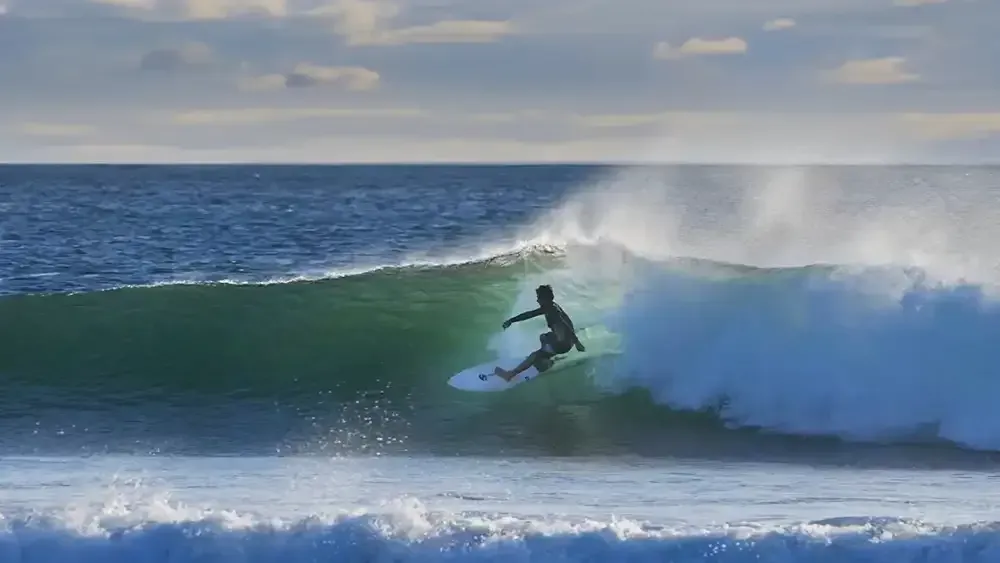
You know the feeling – you’re paddling out confidently, catching plenty of waves, and you can even make sections… but your surfing still looks nothing like it feels. In your head, you’re carving. On the wave, you’re kind of surviving.
That’s the intermediate plateau, and it’s exactly why intermediate surf coaching
with video analysis is such a game changer. Not because it’s fancy. Because it replaces guesswork with receipts. You can’t argue with footage.
Why intermediates stall (even when they surf a lot)
Intermediates usually have the basics: you can paddle out, you can angle takeoffs sometimes, and you’re not panicking every time a set rolls through. The stall happens because the next level is less about effort and more about timing, positioning, and small mechanics that are hard to feel while you’re doing them.
Most intermediates also self-coach from memory. You finish a wave, kick out, and your brain fills in the blanks: “I should’ve gone higher,” or “I leaned too far back,” or “That wave closed out.” Sometimes you’re right. Often you’re missing the real cause.
Video changes that. It shows whether you’re consistently late because you’re taking off too deep, whether your pop-up is stalling your speed, or whether you’re looking down and locking your shoulders every time you try to turn.
What “video analysis” actually means (and what it should mean)
Let’s be clear: video analysis isn’t just watching clips and saying “nice wave.” Good coaching uses video to connect three things: what the wave was doing, what your board was doing, and what your body was doing.
When it’s done well, you’re not simply reviewing a highlight reel. You’re diagnosing patterns. You’ll start noticing that you miss waves on your backhand only when you’re sitting too far inside, or that your best waves happen when you angle early and get one clean pump before the first section.
The real value: objective feedback, not motivation
Motivation is easy. Any friend can hoot you into waves. Objective feedback is different – it’s someone showing you, frame-by-frame, why your board bogged on the bottom turn, or why you lost the pocket after your first maneuver.
That’s also where coaching earns its keep. Intermediates don’t need 15 new concepts. They need one or two corrections that create a chain reaction through the rest of the ride.
Intermediate surf coaching with video analysis: what you’ll fix first
Most intermediate progress happens in a few high-impact areas. The specifics depend on your stance, wave type, and goals, but these are the usual suspects.
Takeoff decisions and positioning
A surprising number of “technique” issues start before you even pop up. If you’re consistently too far inside, you’ll be late and forced into a drop you can’t set a line on. If you’re too far outside, you’ll catch the wave but lose the steep part that gives you speed.
On video, you can see your relationship to the peak. You can also see whether you’re paddling with urgency at the right moment or starting your sprint too early and fading before the wave lifts you.
Pop-up mechanics that steal speed
Intermediates often pop up “successfully,” but not efficiently. A small pause on your knees, hands planted too long, or landing with your weight back can kill the wave’s gift of speed.
Video makes this obvious. It also makes your fixes simpler. Instead of vaguely trying to “pop up faster,” you’ll work on one clean movement: hands down, front foot lands under your center, eyes already looking down the line.
The first two seconds: your entire wave in miniature
If you want more turns, bigger lines, and more makes, you need a better start. Coaches often focus on your first bottom turn and first pump because those set the rhythm for everything that follows.
Video shows whether your bottom turn is actually a turn or just a drift. It shows if your shoulders lead your hips or if your upper body is rotating without your board committing to a rail.
Generating speed without flailing
A lot of intermediates “pump” by bouncing. It feels active, but it’s usually uncoordinated. The board isn’t accelerating because the surfer isn’t compressing and extending with the right timing or staying in the wave’s power pocket.
Watching yourself on a screen is humbling in the best way. You’ll see if you’re too upright, if your arms are doing all the work, or if you’re pumping in flat water instead of in the steep part of the wave.
How a good video session is run
If you’re booking a trip and you’re serious about improving, you want to know how the process works. Here’s what strong intermediate coaching typically looks like.
You surf first, then you review
The best sessions don’t overload you with theory before you paddle out. You surf, get real attempts, then review while the session is fresh in your body.
A coach will usually pick a small theme for the session – for example, “angle takeoffs” or “early speed.” Then they’ll film enough waves to show a pattern, not just a one-off mistake.
The coach chooses one or two actionable changes
The point isn’t to critique everything. The point is to pick the domino that knocks down the rest.
You might leave a video review with a single cue like: “Eyes to the section before you stand,” or “Set the rail earlier on the bottom turn.” Then you go back out and test it immediately.
Your next session builds on the last
Progress comes from stacking wins. Video analysis works best when it’s part of a progression plan, not a one-time event. Intermediates improve fast when each day has a focus, and the coach is tracking what you’re actually doing (not just what you intend to do).
Trade-offs: when video helps most (and when it’s limited)
Video is incredibly powerful, but it isn’t magic. There are a few “it depends” realities worth knowing.
If the waves are extremely messy, video can still help with positioning and decision-making, but it may be harder to isolate technique because the ocean is throwing noise into the data. On the flip side, clean shoulder-high surf is a perfect classroom because your mistakes show up clearly and you get more repeatable reps.
Also, not every coach is a great communicator. The best video coaches don’t just point out what’s wrong – they translate it into one change you can feel. If you leave a review feeling overwhelmed, that’s not a you problem. That’s a coaching problem.
What to look for in a surf trip built for intermediate progression
If you’re traveling for surf, you want the environment to support real improvement, not just a few good photos.
First, you need consistency. Intermediates don’t benefit from one epic day and three flat days. Second, you need the right wave selection for your level that week – not just the most famous wave on the map. Third, you need enough water time to apply feedback immediately, with the right board under your feet.
A strong program also removes the usual travel friction: hunting for boards, figuring out tides, guessing which spot works with the swell, and spending your energy driving instead of surfing.
That’s exactly why structured surf vacations
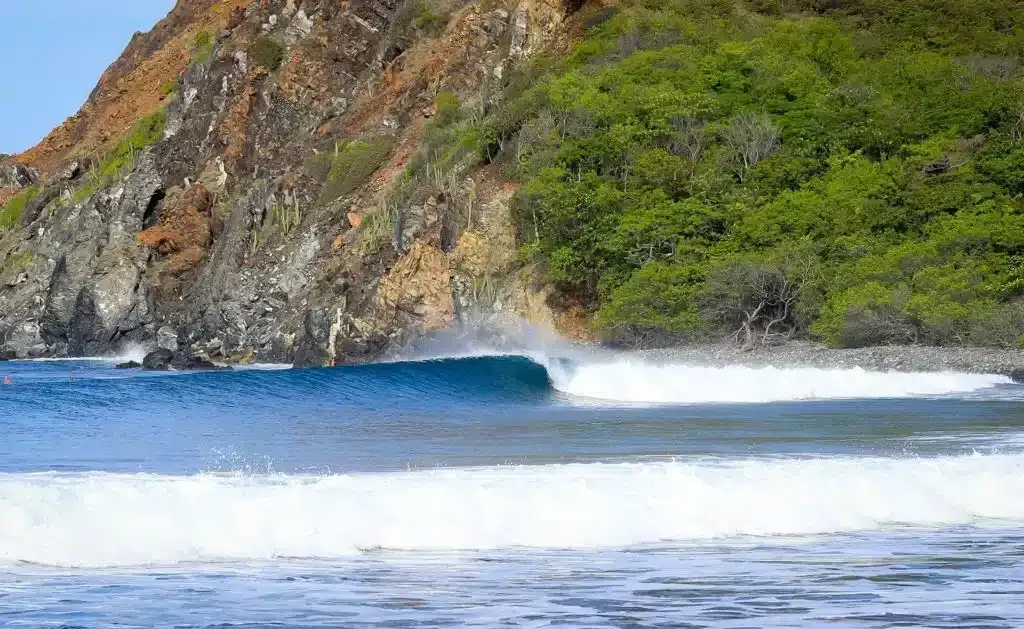
exist, and why a program with daily coaching plus video review can feel like you jumped ahead six months in one week. For travelers who want a turnkey experience in Costa Rica, Witch’s Rock Surf Camp
is designed around that kind of progression – beachfront access for easy reps, plus guided wave-hunting
when conditions call for it.
How to get the most out of your own video coaching
You don’t need to be a pro to approach coaching like an athlete. A few simple habits make a huge difference.
Show up with a goal that’s about performance, not ego. “I want a better bottom turn on my forehand” is great. “I want to rip” isn’t actionable. During the review, ask your coach to point to one moment in the clip where the mistake starts, not where it ends – that’s usually the hidden key.
Then commit to the cue for an entire session. Intermediates often abandon a correction after two waves because it feels unfamiliar. That’s normal. If it feels different, it’s probably working.
Finally, be honest about your board choice. If you’re on a board that’s too small or too high-performance for the wave, video will show you working twice as hard for half the speed. Sometimes the fastest technique fix is a board that paddles better and holds a cleaner line.
The best part: you’ll start seeing what coaches see
After a few rounds of intermediate surf coaching with video analysis, something shifts. You start noticing your own patterns in real time. You can feel when you’re late because you took off under the lip instead of on the shoulder. You can catch yourself looking down. You can sense when your weight is stuck over the tail.
That’s real progression – not just surfing better on vacation, but leaving with a new set of eyes that stays with you at your home break.
If you’re ready to move past “I think I did that wrong” and into “I know exactly what to change next,” put yourself in a setup where you can surf, review, adjust, and repeat. The ocean will still be the ocean, but your learning curve doesn’t have to be a mystery. The best trips are the ones where you fly home tired, happy, and already excited to keep practicing the one thing that finally clicked.