
If you’re planning a surf trip to Costa Rica, you’ve probably seen the term “surf camp package.” But what exactly does that mean?
A surf camp package is designed to simplify your surf vacation by combining surf coaching, accommodations, equipment, and logistics into one organized experience. Instead of planning everything separately, surf camps provide a structured program that helps surfers spend more time in the water and less time worrying about travel details.
At Witch’s Rock Surf Camp in Tamarindo, our programs combine surf lessons, guided surf tours, beachfront accommodations, and professional coaching to create a complete surf experience.
You can explore our Costa Rica surf camp packages here.
Let’s break down what most surf camp packages in Costa Rica typically include.
Beachfront Accommodations Near the Surf
One of the biggest advantages of a surf camp package is staying close to the waves.
Many surf camps are located within walking distance of the beach, allowing surfers to maximize time in the water.
At Witch’s Rock Surf Camp, guests stay just steps from Tamarindo Beach, one of the most consistent surf spots in Costa Rica.
Learn more about our beachfront surf camp in Tamarindo.
Being close to the ocean allows surfers to:
- catch early morning waves
- surf again in the afternoon
- easily join daily lessons and coaching sessions
- experience the local surf culture
Daily Surf Lessons or Guided Surf Tours
Surf instruction is the core of most surf camp packages.
Depending on your level, surf camps typically offer:
Beginner Surf Lessons
Beginner programs focus on:
- learning the pop-up
- understanding wave timing
- ocean safety
- surf etiquette
If you’re new to surfing, our beginner surf lessons in Tamarindo provide structured coaching designed to get you riding waves quickly.
Intermediate Surf Coaching
Intermediate surfers usually focus on improving technique and wave positioning.
Many camps include video analysis and coaching sessions.
Learn more about our intermediate surf coaching programs.
Advanced Surf Tours
More experienced surfers may join guided surf trips to some of Costa Rica’s most famous breaks.
Our advanced surfers often visit breaks such as Witch’s Rock, Ollie’s Point, Playa Grande, and Avellanas.
Learn more about our advanced surf tours in Costa Rica.
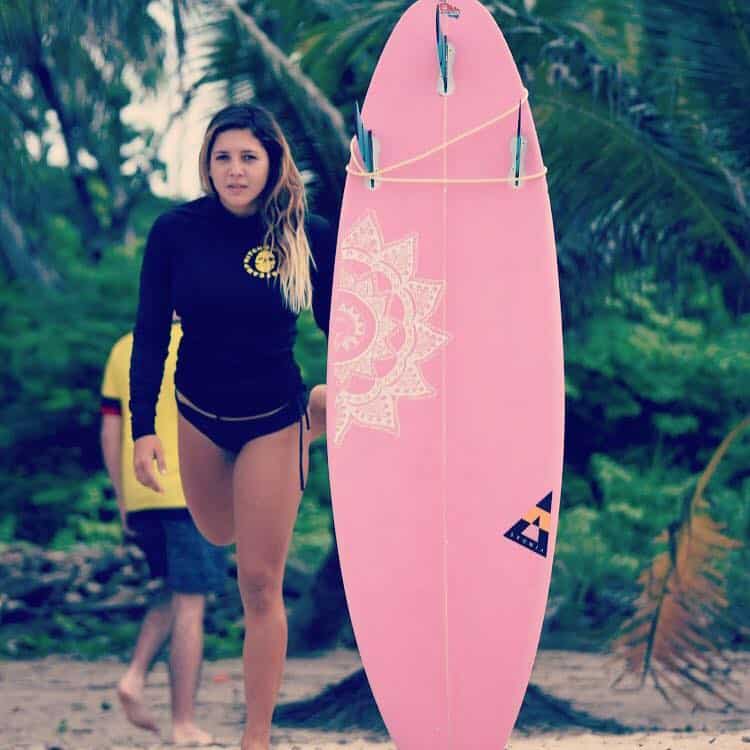
Access to a Full Quiver of Surfboards
Most surf camps provide access to a variety of surfboards so guests can experiment with different shapes and sizes.
Typical board options may include:
- beginner soft-top boards
- longboards
- funboards
- performance shortboards
Having access to multiple boards allows surfers to find the right board for the conditions and progress faster.
Surf Coaching, Video Analysis & Seminars
Modern surf camps often include coaching sessions designed to accelerate your progress.
These sessions may cover topics like:
- reading waves
- positioning in the lineup
- improving takeoffs
- refining turns
- understanding surf conditions
Video analysis can be especially valuable, allowing surfers to review their technique and make adjustments.
Breakfast and Meals
Some surf camps are fully all-inclusive, while others include daily breakfast.
At Witch’s Rock Surf Camp, guests enjoy daily breakfast at our beachfront restaurant, giving surfers a convenient way to fuel up before heading out to surf.
Airport Transportation
Surf camps often simplify travel logistics by including transportation from the nearest airport.
For Tamarindo surf camps, guests typically fly into Liberia International Airport (LIR).
Transportation is then arranged directly to the surf camp.
Learn more about airport transfers from Liberia to Tamarindo.
What Is NOT Included in Most Surf Camps
While surf camps provide a convenient all-in-one experience, not every service is always included in the base price.
Some surf camps charge extra for:
- lunch and dinner meals
- alcoholic beverages
- optional boat trips to advanced surf breaks
- travel insurance
- international flights to Costa Rica
Reviewing what each surf camp includes helps travelers compare programs and avoid unexpected costs.
Why Tamarindo Is One of the Best Places for Surf Camps
Tamarindo has become one of the most popular surf camp destinations in Costa Rica because it offers:
- consistent waves year-round
- warm water temperatures
- beginner-friendly beach breaks
- nearby advanced surf spots
This combination makes Tamarindo ideal for surfers of all levels.
A Complete Costa Rica Surf Vacation
Booking a surf camp package allows travelers to focus on surfing rather than logistics.
Instead of coordinating hotels, surf lessons, equipment rentals, and transportation separately, everything is organized into a single experience.
Many surfers choose surf camps because they offer:
- structured coaching
- easy travel planning
- access to surfboards
- local surf knowledge
- a social surf community
If you’re planning a Costa Rica surf vacation, surf camps provide one of the easiest and most rewarding ways to experience the country’s waves.
Experience a Surf Camp in Tamarindo
Since 2001, Witch’s Rock Surf Camp has welcomed thousands of surfers to Tamarindo for structured surf programs and unforgettable surf trips.
Our surf camp packages include:
- beachfront accommodations
- daily surf lessons or guided tours
- surf seminars and coaching
- breakfast at our beachfront restaurant
- airport transportation
- access to our surfboard inventory
If you’re looking for a Costa Rica surf camp experience, Tamarindo offers the perfect combination of waves, warm water, and surf culture.
Explore our surf camp packages in Costa Rica.
FAQ
What does a surf camp package include?
Most surf camp packages include accommodations, surf lessons or coaching, access to surfboards, and organized surf sessions. Some packages also include meals and airport transportation.
Are surf camp packages good for beginners?
Yes. Many surf camps are specifically designed for beginners and provide structured lessons that teach the fundamentals of surfing and ocean safety.
What airport do you fly into for Tamarindo surf camps?
Most surfers fly into Liberia International Airport (LIR), which is about one hour from Tamarindo.
Do surf camps provide surfboards?
Yes. Most surf camps include access to multiple surfboards so guests can choose the right board for their skill level and conditions.