
You don’t fly to Costa Rica for “pretty good” waves.
If you’re already comfortable in solid surf, the real win is efficiency: paddling out at the right break, at the right tide, with the right board under your feet – and not wasting a single prime window because a road washed out, the wind switched, or the lineup is a zoo.
That’s the core value of advanced guided surf tours in Costa Rica. Not a scenic drive with a sticker on a van. Not a vague promise of “secret spots.” It’s a system that stacks small edges all day long – swell angle, wind, tide, crowd behavior, access, and equipment choices – so you get more quality reps and fewer missed opportunities.
What “advanced guided surf tours Costa Rica” should really mean
For advanced surfers, “tour” can be a misleading word. The best trips don’t feel like you’re being shepherded from beach to beach. They feel like you’re in a high-functioning strike team: someone is tracking conditions, someone is managing the logistics, and you’re free to surf.
A real advanced program has two outcomes. First, it puts you in waves that match your ability and your goals, whether that’s hollow rights, punchy beachbreak, or long walls for turns. Second, it improves your surfing – because scoring is fun, but progression is what you take home.
There’s a trade-off here. Pure wave-hunting can be amazing, but if nobody is watching you surf and giving feedback, you can repeat the same habits in better waves and still plateau. On the flip side, heavy coaching without smart spot selection can mean “great instruction” in mediocre conditions. The sweet spot is guided travel plus coaching built into the week.
Why Costa Rica is ideal for advanced wave-hunting
Costa Rica’s Pacific coast is a gift for surf travel because it offers variety in a tight radius. Point setups, reef passes, river mouths, and beachbreaks can all light up depending on the swell direction and tide. The water is warm, the days are long, and even a short trip can produce multiple distinct sessions if you’re moving with purpose.
But Costa Rica also punishes assumptions.
A wave you saw on a highlight reel might only work on a narrow tide. A road that looks close on a map can take twice as long in the rainy season. And lineups can shift dramatically depending on weekends, holidays, and what’s breaking elsewhere. Advanced surfers don’t need hand-holding in the water, but they do benefit from local decision-making and a plan that adapts fast.
The difference between “guided” and “just driven there”
A lot of surf trips sell transportation and call it guidance. For advanced surfers, that’s not enough.
Guidance is pre-session planning. It’s knowing when to leave, what to bring, which board makes sense, and what the wave is going to do over the next three hours. It’s also real-time adjustment: switching zones when the wind goes onshore early, or pushing the session later because the tide needs to drop.
And guidance is risk management that doesn’t feel dramatic. You want someone who can read currents, identify sketchy entries, and set clear expectations without killing the stoke. Advanced doesn’t mean invincible. It just means your margins are smaller because you’re often surfing heavier waves.
What to look for in an advanced tour operator
The best advanced guided surf tours are built around repeatable processes, not heroic stories.
Start with how they choose waves. Ask whether the plan is based on swell direction, tide windows, and wind patterns – or whether it’s the same itinerary every week regardless of conditions. Consistency comes from adapting, not from forcing a schedule.
Next, look at equipment access. Advanced surfers travel with boards, but Costa Rica is the kind of place where having options matters. Maybe you brought a daily driver and a step-up, but you didn’t bring a groveler for a playful afternoon beachbreak or a larger board for a long paddle at a point. A deep quiver on site saves sessions.
Then look at coaching depth. Even strong surfers benefit from video review, especially in unfamiliar waves. A short clip can reveal whether you’re setting your line too high, rushing the bottom turn, or fading your takeoffs when you should be committing. The best operators don’t just say “charge more.” They help you surf smarter.
Finally, evaluate logistics like they matter – because they do. Airport transfers, board storage, early starts, and timing meals around tides are the unglamorous details that determine how much you actually surf.
A realistic week: how advanced surfers get the most out of Costa Rica
Advanced surfers often underestimate how much structure helps. Not structure like a rigid itinerary, but structure like a rhythm that keeps you fresh and consistently in good waves.
A strong day usually starts with an early assessment: wind direction, swell size and period, and where the best combination will land with the tide. You want to hit your “must-surf” window first, because later sessions are easier to adjust.
From there, the best trips balance intensity. If you go hard in overhead surf every single session, you’ll eventually start making tired decisions. A smart guide will mix in a cleaner, more forgiving wave for performance reps – then chase the heavier option when the conditions line up.
This is also where coaching fits naturally. Video review after a key session can recalibrate your next one. You’re not trying to rebuild your surfing on vacation. You’re trying to sharpen a few high-impact pieces – positioning, wave selection, and one or two technical cues – so every session stacks.
Tamarindo as a base: easy access without feeling stuck
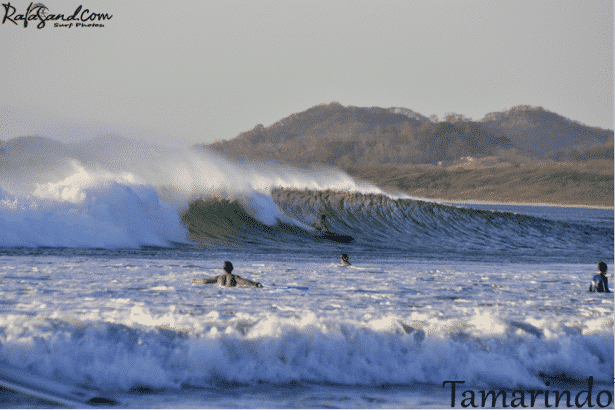
Advanced surfers sometimes dismiss Tamarindo because it’s known for consistency and user-friendly peaks. But as a base, it has a big advantage: you can surf immediately and still travel efficiently to marquee waves when they’re on.
That “base plus strike missions” approach matters. If you’re staying somewhere remote and the wave isn’t working, your options can shrink fast. From a well-connected beach town, you can stay flexible: warm up on a local break, then move when the timing is right.
It also makes rest and recovery easier. Advanced surf travel is still travel. Being able to sleep well, eat well, and reset between sessions keeps your decision-making sharp – which is what you need when the waves get serious.
Coaching for advanced surfers: what actually moves the needle
At an advanced level, the biggest improvements usually come from better choices, not bigger turns.
Better wave selection often starts with understanding the lineup’s “tell” – the set rhythm, where the wave stands up, and which surfers are consistently in position. A guide who knows the break can shorten your learning curve from three sessions to three waves.
Takeoff decision-making is another lever. In unfamiliar waves, advanced surfers sometimes hesitate because they’re calibrating. Good coaching can give you a clearer framework: when to fade, when to go straight, when to commit to the bowl, and when to skip the wave entirely.
And then there’s board choice. Costa Rica can shift from playful to powerful quickly. Riding the wrong board doesn’t just limit performance – it can put you in bad spots. Having someone who understands your surfing and the wave’s demands can turn a frustrating session into a productive one.
When a surf camp package beats piecing it all together
If you love planning, building your own trip can be fun. But advanced surfers usually care about one thing more than planning: water time.
A well-run, all-inclusive setup removes the friction that quietly steals sessions: rental shop hours, hunting for a board that isn’t waterlogged, coordinating drivers, guessing which break will handle the swell, and trying to be your own coach.
That’s why many advanced travelers choose a structured package that bundles accommodations, transfers, boards, and guided sessions. For example, Witch’s Rock Surf Camp in Tamarindo has been running programs since 2001 and is built around exactly this kind of progression plus logistics – beachfront base, big in-house quiver, guided trips to regional standouts, and coaching that includes video review.
It’s not the only way to travel, but it’s a reliable way to eliminate guesswork and keep the week focused on surfing.
Setting expectations: crowds, seasons, and “it depends” realities
Costa Rica delivers, but advanced surfers should go in with clear eyes.
Crowds can be real in popular zones, especially around holidays and when conditions are obviously good. A guide can help you time sessions, choose less obvious peaks, and avoid wasting energy fighting for scraps – but they can’t make a famous wave empty.
Seasonality also matters. The Pacific gets consistent swell in many months, but the character changes. Some windows favor cleaner mornings and manageable size; others bring more power and more weather. If you want heavy waves, say that. If you want performance walls, say that too. “Advanced” isn’t one category – it’s a spectrum of goals.
And finally, respect the ocean. Advanced tours should feel empowering, but not reckless. The best guides will encourage you to push while still making smart calls about currents, exits, and fatigue.
If you’re planning a Costa Rica trip and you’re already past the beginner phase, aim for a tour that treats your time like a limited resource. The best days aren’t the ones where you “got lucky.” They’re the ones where everything lined up because someone made it line up – and you paddled out ready.