You can tell who’s taking beginner surf lessons in Tamarindo within the first five minutes at the beach: the brand-new surfer carrying a board like it’s a king-size mattress, the friend who “used to snowboard” and thinks that counts, and the quiet overachiever who’s already asking about tides.
If you’re booking a first surf trip to Costa Rica, Tamarindo is a smart pick because the goal isn’t just to stand up once. It’s to build enough confidence and ocean awareness that you can keep surfing after the vacation glow wears off. Done right, a lesson here isn’t a one-off activity – it’s the start of a repeatable system.
Why Tamarindo works so well for beginners
Tamarindo’s main beach is known for consistency, and consistency is everything when you’re learning. A beginner needs lots of chances, close together, to practice the same movement patterns: paddling, pop-up timing, stance, and balance. When the ocean delivers steady, approachable waves, you get more reps and less waiting.
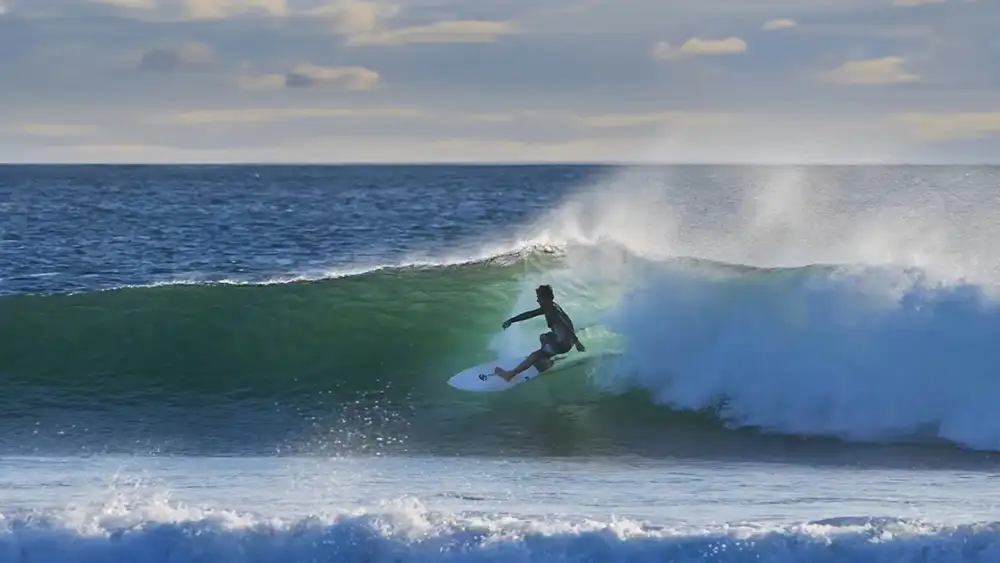
Just as important, Tamarindo has a mix of wave zones. On many days you can find gentler whitewater for early drills and slightly cleaner, beginner-friendly “green waves” as you progress. That means your learning curve doesn’t have to stall out after day one.
There’s a trade-off: Tamarindo is popular, and crowds can be real, especially at peak travel times and in the most obvious takeoff areas. The upside is you’re in a surf town with plenty of instructors, board options, and a culture built around getting people into waves safely. The key is choosing instruction that includes structure, not just vibes.
What “good” beginner surf instruction actually looks like
Not all beginner lessons are built the same. A great first experience is fun, but fun without progression is how people go home thinking surfing is “impossible.” The best beginner surf lessons Tamarindo visitors can book share three traits: clear safety systems, simple coaching cues, and enough time in the water to turn advice into muscle memory.
Safety and ocean awareness first, always
A solid lesson starts with the ocean itself, not the board. You should learn how to identify rip currents, where to paddle out, how to fall safely, and how to protect your head and other surfers. If the instructor isn’t talking about where to stand when you’re not riding and how to keep control of your board, that’s a red flag.
Technique, not just “stand up!”
Most first-timers think the pop-up is the whole sport. It’s not. Pop-up mechanics matter, but paddling position, timing, and reading the wave are the real difference between standing up once and standing up ten times.
A good instructor will tweak small things that create big results: where your chest sits on the board, when you take your last paddle stroke, whether your hands land under your ribs, and how wide your stance should be. If you’re hearing the same generic cue over and over, you’re probably not getting personalized feedback.
A plan that evolves across days
If you’re traveling for a dedicated surf trip, the biggest mistake is treating lessons like isolated events. Real progression usually happens over multiple sessions where the goals change: first controlled whitewater, then angled takeoffs, then trimming down the line.
If you’re only in Tamarindo for a day, you can still learn a lot. But if you can swing a multi-day setup, you give your body time to adapt. Surfing uses stabilizer muscles you didn’t know you had, and day two is where many people finally feel the timing click.
What to expect from your first few days
Most beginners want an honest timeline. Here it is: you can have an amazing week and still feel like you’re “new.” That’s normal. The win is leaving with a foundation you can build on.
Day one is usually about comfort: board handling, paddling basics, popping up in whitewater, and learning how to finish a ride with control. You’ll probably stand up, and you’ll definitely fall. If you’re laughing, you’re doing it right.
Day two is where instructors often start introducing more decision-making. You’ll work on timing and maybe try catching waves with a bit more shape. You’ll also start noticing how much the ocean changes hour to hour.
By day three or four, many beginners are ready to attempt more consistent green-wave takeoffs in the right conditions. Not everyone gets there at the same pace, and that’s not a problem. A safe, confident surfer who understands etiquette is always ahead of the person forcing bigger waves without control.
The gear question: boards, rash guards, and what matters
As a beginner, you want equipment that makes success likely. That means more foam and more stability than your ego might prefer.
In Tamarindo, most true beginners progress fastest on a soft-top longboard style surfboard. The extra volume helps with paddling speed, and the wider platform forgives imperfect foot placement. If you start too small because you “don’t want a huge board,” you’ll spend the week tired and frustrated.
You’ll also want sun protection that doesn’t distract you. A rash guard is standard, reef-safe sunscreen is non-negotiable, and hydration matters more than people expect in the Costa Rican heat.
One nuance: “the right board” can change over the week. As soon as you can paddle efficiently and angle your takeoff, you might benefit from something slightly smaller or with a different shape. That’s why access to a variety of boards is such a big deal for surf trips.
When to book your lesson: swell, tides, and crowds
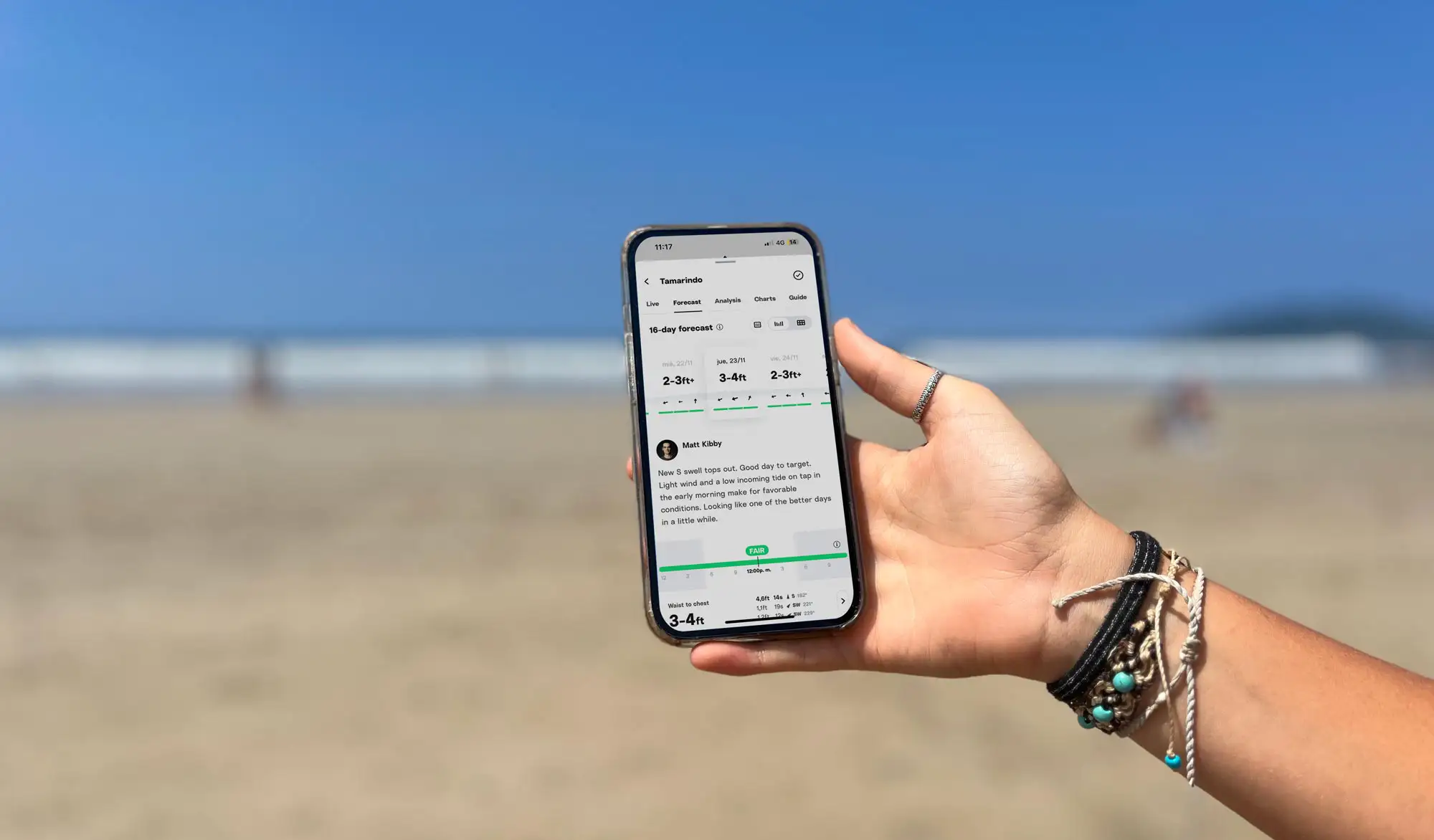
Tamarindo can work year-round, but conditions shift. You don’t need to become a surf forecaster to learn here, yet it helps to understand the basics.
Smaller, cleaner days are beginner gold. Big surf might look exciting, but it can push the best beginner zones out of reach. Tide also changes everything. At certain tide stages, the wave can be softer and friendlier; at others, it can get faster or break in a way that’s harder for first-timers.
Crowds are also part of timing. Early sessions often feel more spacious, and you’ll usually get better coaching when your instructor can keep eyes on you without a wall of surfers between you.
This is where guided coaching earns its keep: a good program doesn’t just teach you how to pop up. It places you in the right spot at the right time based on swell and tide so you get more quality attempts and fewer chaotic ones.
Group lessons vs private coaching: what’s best for you?
It depends on what you want from the trip.
Group lessons can be high-energy and social, and they’re great if you’re motivated by community. They’re also a solid fit for first-timers who mainly need safety, basics, and encouragement.
Private coaching is usually the fastest path to progress because feedback is constant and tailored. If you’ve surfed a little before and you’re stuck – maybe you can stand up in whitewater but can’t catch green waves – private time can break that plateau quickly.
There’s also a middle ground many people love: a structured program where you get instruction plus video feedback. Video doesn’t lie, and it turns vague feelings like “I’m late” into specific fixes like “your hands are too far forward, so your hips drop.”
What a turnkey surf week can look like in Tamarindo
If your priority is maximum time in the water with minimal planning, a surf camp-style setup is hard to beat. The best ones remove the friction points that quietly drain a surf trip: figuring out boards, arranging transportation, timing sessions, and choosing the right spots.
A typical rhythm looks like this: you wake up close to the beach, eat breakfast, and head straight to a lesson or coached session when conditions are best. Midday can include rest, a technique talk, or video review, then you’re back out for more practice. The day feels full without feeling chaotic.
That structure matters for beginners because learning surf isn’t just physical. It’s mental. When you’re not burning energy on logistics, you’re calmer in the water, and calmer surfers learn faster.
If that sounds like your style, Witch’s Rock Surf Camp is a Tamarindo beachfront option built around exactly that kind of progression-focused, all-inclusive week: accommodations, daily coaching, video analysis and seminars, unlimited board rentals from a big in-house quiver, and airport transfers from Liberia (LIR). They’ve been doing it since 2001, and the experience shows in how organized the learning pathway feels for true beginners.
How to know you’re progressing (even if you’re still falling)
Beginners often judge success by one metric: “Did I stand up?” A better way is to track the skills that create consistency.
You’re progressing when you can paddle out without feeling panicked, choose a safe lineup position, and control your board around others. You’re progressing when you can catch whitewater on purpose instead of by accident, and when your pop-up feels like one motion instead of a scramble.
And you’re really progressing when you start to predict what the wave is about to do. That’s the moment surfing stops feeling random and starts feeling like a conversation with the ocean.
Common mistakes that slow beginners down
Most slowdowns come from trying to skip steps.
The first is using a board that’s too small, which turns every paddle into a workout and every wave into a maybe. The second is surfing in the wrong zone – either too deep where waves aren’t breaking yet or too far inside where you get smashed by every set. The third is ignoring etiquette because you’re focused on your own ride. Even as a beginner, learning right-of-way and spacing keeps you safer and makes other surfers more willing to share the peak.
Finally, many beginners underestimate recovery. You’ll improve faster with a solid night of sleep, enough food, and a little downtime than you will by grinding yourself into exhaustion.
If you’re coming to Tamarindo for beginner surf lessons, give yourself permission to be new. Show up with curiosity, take coaching seriously, and keep it fun. The ocean has a way of rewarding patience – and the best part is that the first real wave you ride cleanly tends to follow you home long after your tan fades.